
Thank you for Subscribing to Transportation Review Weekly Brief


 Trent Dennington, President and CEO
What operational challenges arise when trucking breakdowns disrupt schedules and financial performance?
In trucking, a breakdown is never just a breakdown. It is a missed appointment, a delayed load, a frustrated driver, a stranded asset, an interrupted schedule, and a financial problem that compounds by the minute. For fleet operators, the roadside is where logistics turns personal.
Pressure rises fast, information is often incomplete, and decisions have to be made before the full picture is visible. In that environment, the real differentiator is not simply who can send a tow truck. It is who can bring order to the chaos, reduce uncertainty, and move a broken-down unit back into the flow of business with speed, discipline, and control.
That is the space Dispatch Wrecker Service has claimed for itself.
How does Dispatch Wrecker Service structure its model to address fleet disruption challenges?
 The company has built its identity around a clear understanding of what fleets actually need in moments of disruption. They do not need another vendor that merely answers the phone and brokers a one-time service call. They need a partner that understands the operational stakes behind every roadside event and can manage the entire process with consistency, transparency, and urgency.
Dispatch delivers on that need through a model that fundamentally reshapes how towing relationships are structured. Instead of operating on isolated, one-off service calls, the company aggregates demand across a broad base of fleet customers. That collective volume becomes its strategic leverage. By consistently directing work to a curated network of service providers, Dispatch is able to negotiate more competitive pricing while setting clear expectations around performance and response times.
Our whole goal is to provide volume to vendors, build strong relationships, and in turn deliver better pricing and service outcomes for our customers.
What emerges is not just a service, but a structured ecosystem—one where incentives are aligned, variability is reduced, and breakdowns are managed with a level of control that traditional models struggle to achieve.
Under the leadership of president and CEO Trent Dennington, Dispatch has developed a model that blends towing expertise, technology, and disciplined service management into a solution designed for modern fleet operations.
Fixing the Invisible Failure Point in Fleet Operations
Why do traditional towing systems create operational inefficiencies and uncertainty for fleet managers?
The origin of that premise lies in a recurring operational tension. For fleet operators, a breakdown is not a single event. It is a chain reaction. A driver is stranded, a load is delayed, a customer expectation is compromised, and internal teams are pulled away from revenue-generating work to manage the situation. Traditional towing vendors, often operating independently and without standardized practices, introduce further uncertainty. Pricing varies widely, response times are inconsistent, and communication gaps leave fleet managers navigating blind. The problem is not the existence of towing services; it is the lack of cohesion around them.
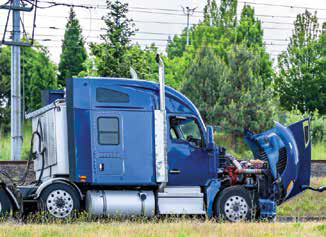 Dispatch steps into that gap with a model designed to bring order to disorder. Rather than asking fleets to build and manage their own networks of vendors, the company aggregates and manages those relationships at scale. It creates a structured ecosystem where service providers are not just available, but accountable, and where pricing is not reactive, but controlled through consistency and volume.
Dennington explains the philosophy behind this approach: “Our whole goal is to provide volume to vendors, build strong relationships, and in turn deliver better pricing and service outcomes for our customers.”
This alignment of incentives is central to the company’s story. In a traditional model, towing providers often operate defensively, pricing jobs high to offset uncertainty around payment and inconsistent work volume. Dispatch reverses that dynamic. By ensuring steady work and reliable payment, it gives vendors the confidence to offer competitive rates and prioritize service quality. The result is not just cost savings for fleets, but a more stable and predictable operating environment for everyone involved.
Built on Urgency, Driven by Care
In what way does Dispatch integrate technology and human coordination during breakdown response workflows?
Yet the company’s differentiation does not rest solely on economics. It is also rooted in a cultural principle that shapes how every breakdown is approached. Dennington captures it in a phrase that has become internal shorthand for the organization’s ethos: “One of our main mottos is treat it like your mom on the side of the road. That mindset drives every decision we make.” What appears simple is, in practice, transformative. It reframes each case from a transactional task into a personal responsibility, reinforcing urgency, empathy, and accountability at every stage.
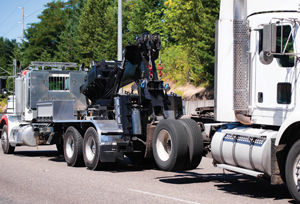 This philosophy becomes tangible in the way Dispatch manages a real-world breakdown. When a driver encounters an issue, the process begins almost instantly. Through API integrations or a streamlined digital portal, the breakdown request enters Dispatch’s system without duplication or delay. Within moments, the company acknowledges receipt and begins calculating the most efficient response. What follows is not a series of disconnected calls, but a coordinated workflow that integrates technology, human expertise, and vendor relationships into a single, continuous process.
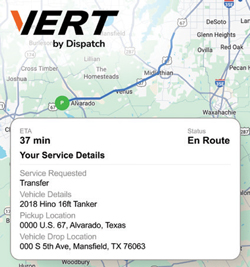
At the center of this workflow is VERT, Dispatch’s proprietary technology platform. Built internally by professionals who understand the operational realities of towing and roadside assistance, VERT reflects practical experience rather than abstract design. It allows users to submit requests in under thirty seconds, track service progress in real time, and access a complete timeline of each event. From the moment a tow is dispatched to the final drop-off, every step is visible, documented, and measurable.
Turning Every Breakdown into a Blueprint
The platform’s capabilities extend beyond visibility. AI-assisted dispatch tools analyze incoming requests and recommend optimal vendor options based on location, equipment, and historical performance. These recommendations are then validated by experienced dispatch technicians who ensure that each assignment meets the specific requirements of the situation. This combination of speed and oversight allows Dispatch to reduce response times while maintaining service integrity.
-
One of our main mottos is treat it like your mom on the side of the road. That mindset drives every decision we make.
For drivers and fleet managers, the experience is markedly different from traditional models. Instead of repeated phone calls and uncertain updates, they receive a tracking link that shows exactly where the service provider is and how the job is progressing.
Dennington emphasizes the significance of this transparency: “Dispatch is proactive in communication, and that means a lot to our drivers. They’re confident they’ll make their load and get home on time.” In an industry where delays carry cascading consequences, that confidence is not incidental; it is operationally critical.
The story, however, does not end with the resolution of a single breakdown. Dispatch treats each event as a data point within a larger system. VERT captures detailed information on timing, costs, locations, and causes, transforming individual incidents into actionable insights. Over time, fleets gain the ability to identify patterns, whether it is a recurring mechanical issue, a high-cost geographic area, or a vendor performance trend. These insights enable proactive decision-making, shifting the focus from reactive problem-solving to strategic optimization.
Measured in Minutes and Margins
 The impact of this approach is measurable and, for many clients, immediate. In one recent case, a fleet that had been averaging over six hundred fifty dollars per tow saw that figure drop to approximately five hundred dollars after implementing Dispatch’s services. This reduction, exceeding twenty percent, was accompanied by a decrease in overall downtime of more than an hour per incident. In an industry where margins are narrow and schedules are tight, such improvements translate directly into financial and operational gains.
Across its client base, similar patterns emerge. Cost reductions typically fall within a range of twenty to twenty-five percent, while service completion times consistently improve. In more complex scenarios, Dispatch’s intervention has produced even more dramatic results. The company has negotiated substantial savings on high-cost invoices, including a single instance where it reduced a charge by over forty-three thousand dollars. These outcomes are not framed as isolated wins, but as evidence of a system designed to protect and optimize client resources.
Behind these results is a vendor network that reflects the same principles of consistency and accountability. Dispatch does not rely solely on digital marketplaces or anonymous provider pools. Instead, it builds and maintains relationships with towing operators across North America, many of whom are known personally to Dennington and his team. This network is continuously evaluated, with an emphasis on reliability, professionalism, and a willingness to resolve issues without deflection.
The Human Infrastructure behind a High-Performance Network
The company’s internal structure mirrors this commitment to accountability. Each breakdown is managed by a coordinated team that includes intake specialists, dispatch professionals, and case managers. This layered approach ensures that every aspect of the process is monitored and that any deviation from expectations is addressed immediately. Communication remains proactive, with clients informed of progress, challenges, and resolutions in real time.
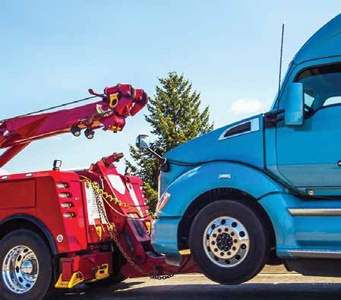 Equally important is the stability of the organization itself. Dispatch has cultivated a workforce characterized by long tenure and internal growth. Many of its leaders have developed their careers within the company, contributing to a culture of shared experience and institutional knowledge. This continuity reinforces service quality and supports the company’s ability to scale without compromising its standards.
Dennington reflects this alignment through feedback gathered from both clients and vendors. “One of the best things we hear is that working with Dispatch means you can expect to stay busy,” he says, highlighting the consistency of work provided to service partners. On the client side, the sentiment is equally strong, with one describing the experience as something that can be set in motion and trusted without constant oversight. That sense of reliability is, ultimately, what distinguishes Dispatch within its market.
Where Specialization Meets Innovation
As the company looks ahead, its trajectory remains grounded in the same principles that defined its origin. Growth is driven by the expansion of its network, the refinement of its technology, and the evolving needs of its clients. Dispatch has extended its capabilities beyond heavy-duty towing into areas such as roadside repair and claims support, responding to customer demand while maintaining a clear focus on its core expertise.
Dennington articulates this balance succinctly: “We’re focused on adapting and using technology to provide more efficient outcomes while staying true to who we are as breakdown specialists.” This commitment to specialization, combined with a willingness to innovate, positions Dispatch to lead the next phase of transformation in the roadside assistance space.
In a landscape where unpredictability has long been accepted as the norm, Dispatch Wrecker Service offers a different narrative. It is a story of structure replacing fragmentation, of data informing decisions, and of relationships driving performance. By redefining how breakdowns are managed, the company has not only improved outcomes for its clients but has also set a new standard for what reliability looks like in an industry built around urgency.
Precision, Visibility And Control In Fleet Roadside Assistance
Fleet roadside incidents expose a persistent gap between urgency and coordination. Delayed response times, unclear service visibility and inconsistent pricing often compound the initial disruption of a breakdown. For fleet operators managing tight delivery windows and thin margins, the issue is not just recovery, but how predictably and efficiently that recovery is executed. The difference between a managed system and an ad hoc approach becomes most visible when multiple vendors, geographies and service conditions must be handled simultaneously.
Effective roadside assistance solutions distinguish themselves through their ability to control response quality across a fragmented service landscape. A scalable vendor network alone is not sufficient; what matters is how that network is governed. Fleets benefit when providers can direct volume in a way that secures consistent service levels and negotiated pricing rather than relying on transactional, one-off engagements that often lead to inflated costs and uneven performance. A structured network also reduces the burden on internal teams, who would otherwise need to vet vendors, manage follow-ups and resolve billing discrepancies.
Technology plays a central role, but only when it is tightly integrated with real-world dispatch experience. Visibility into a breakdown event—from request initiation to final drop-off—has become a baseline expectation. Systems that provide live tracking, clear timelines and centralized documentation reduce the need for constant follow-up while allowing fleet managers to make informed decisions in real time. The value extends beyond the moment of breakdown. Data captured across events enables fleets to identify recurring failure patterns, cost anomalies and geographic inefficiencies, turning roadside incidents into actionable operational insight.
"The real challenge in roadside assistance is not recovery itself, but how predictably and efficiently that recovery is executed."
Communication discipline remains equally critical. Breakdowns rarely follow a linear path, and disruptions during service are common. Providers that maintain proactive updates and clear escalation pathways allow fleets to adjust quickly rather than react late. This consistency builds trust not only with fleet managers but also with drivers, who rely on accurate information during high-pressure situations. A structured case management approach—where intake, dispatch and resolution are handled by coordinated teams—ensures accountability throughout the lifecycle of each incident.
Dispatch Wrecker Service positions itself within this landscape by combining network control, operator-led technology and disciplined communication into a unified model. It integrates directly with fleet systems through API connections, allowing breakdown requests to flow into its dispatch environment without manual re-entry. Its in-house platform provides live tracking, service timelines and consolidated documentation, giving fleets full visibility while reducing administrative effort. The company supplements its vendor network with self-performed services in critical areas, maintaining control over service quality and pricing where needed. This hybrid approach enables it to reduce downtime by over an hour and lower overall costs by more than 20% in many cases, while maintaining consistent service standards across regions .
Its emphasis on operator-built processes ensures that technology supports execution rather than replacing it. Dedicated teams manage each case from intake to resolution, maintaining proactive communication and addressing disruptions as they arise. The result is a model where fleets can hand off breakdown management with confidence, knowing that response speed, cost control and service transparency are being handled in a coordinated system rather than a series of disconnected interactions.
...Read more
Company :
Dispatch Wrecker Service
Management Trent Dennington, President and CEO
Description
Dispatch Wrecker Service addresses the hidden operational chaos behind fleet breakdowns by structuring vendor networks, aligning incentives, and integrating real-time technology, transforming roadside events into controlled, predictable processes that reduce downtime, stabilize costs, and improve decision-making across fleet operations.