
Thank you for Subscribing to Transportation Review Weekly Brief
Transportation Review: Specials magazine
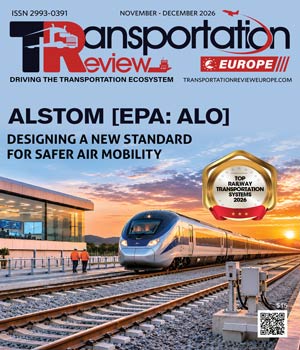
Alstom [EPA: ALO]
Designing a New Standard for Safer Air Mobility
Railway modernization is increasingly a systems-engineering challenge. Adding trains or expanding track capacity alone cannot deliver efficient transportation when signaling, infrastructure, fleet maintenance and passenger information operate in isolation. Operators need technologies that adapt to existing networks and support dependable service over decades. Greater importance now falls on suppliers capable of coordinating the full railway ecosystem, from vehicle design and train control to digital operations and long-term asset management. Alstom approaches this challenge through a portfolio spanning rolling stock, signaling, infrastructure, digital technologies, components and lifecycle services. Its rolling stock range covers high-speed and intercity trains, regional and commuter trains, metros, trams, monorails and automated people movers. Their value increasingly depends on how effectively they interact with surrounding infrastructure and control systems. Combining vehicle engineering with railway systems expertise enables Alstom to address individual fleet requirements and broader network modernization programs. Signaling, Services and Digital Supervision Signaling forms another critical layer. Alstom develops communications-based train control (CBTC), European Rail Traffic Management System (ERTMS) technologies, interlocking, train detection and traffic supervision systems. These technologies coordinate train movements, establish safe operating distances and manage traffic across busy networks. Its Urbalis portfolio serves urban rail applications, while Atlas supports mainline train control and interoperability. Better coordination between onboard equipment, trackside infrastructure and control centers can help operators increase service frequency and use existing assets more effectively.
Transportation Management
Applied Autonomy
Connecting Autonomous Vehicles to Real-World Transport Operations
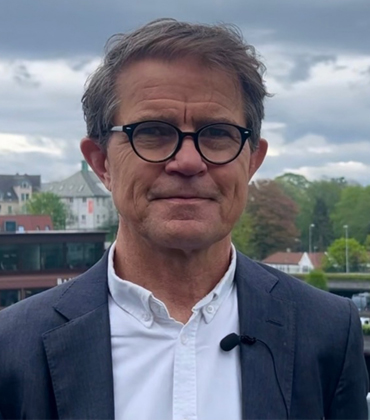
Olav Madland, CEO
Deploying autonomous vehicles as a transport service involves more than independent driving. Operators must integrate them into existing dispatch systems, coordinate them with conventional vehicles and manage unexpected situations. Scaling these services requires a way to manage different vehicle types within existing transport operations. Applied Autonomy, part of the INIT Group, helps operators integrate autonomous vehicles from different manufacturers and autonomous driving system providers into their existing transport operations through xFlow, its vehicle-agnostic software platform. xFlow gives dispatchers a shared view of autonomous from different vendors, including their locations, status and estimated arrival times and provides the flexibility operators are looking for. It also provides a common operational layer for remote assistance, passenger support and contingency management, enabling operators to establish consistent procedures for situations that exceed a vehicle’s autonomous driving capabilities. With interfaces to third-party systems for on-demand and scheduled services, xFlow operators can introduce autonomous vehicles gradually while continuing to use their existing dispatch systems..
Fleet Management
Nav-XL
Revolutionizing Truck Navigation
John Toquet, Co-Founder and Operations Director ;Thomas Toquet, Co-Founder and Commercial Development Director
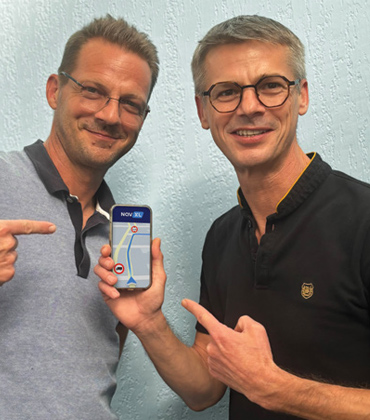
Life on the road is demanding. Tight delivery windows, long hours and unexpected detours are all part of a truck driver’s day. Nav-XL, a professional-grade navigation app for iOS and Android, simplifies every journey with truck-specific routing and real-time insights designed to keep fleets running smoothly. The app’s creators, Thomas and John Toquet, have been shaping the truck navigation landscape for more than two decades. After launching one of France’s first truck-dedicated GPS systems, the brothers set out to create Nav-XL—an app developed in close collaboration with professional drivers, logistics experts and technology partners. “Our long experience, trusted relationships with fleets and constant dialogue with drivers are what make Nav-XL stand out,” says Thomas Toquet, Co-Founder and Commercial Development Director. From day one, Nav-XL was built around drivers’ real-world needs. Over 1,000 professionals tested the app before launch, providing feedback that refined every feature. The result: a tool that saves time, reduces stress and builds confidence on every trip. Technology Built for the Road Nav-XL calculates the safest and fastest routes for heavy goods vehicles, automatically considering height, weight, cargo type and road restrictions. It guides drivers away from unsuitable roads and low bridges, while offering accurate ETAs and real-time traffic updates. The app also reminds drivers about rest breaks, helping them comply with regulations effortlessly. For drivers, the benefits are immediate—less time planning, fewer fines and smoother, more predictable journeys. Voice-guided navigation, clear mapping and live updates keep attention on the road rather than on complex route planning.
Railway Management System
Focus Sensors
Advancing Rail Safety through Intelligent Fibre Sensing
Dr Ed Austin, Co-Founder and Managing Director
Precise monitoring of assets such as tracks and wheels is essential to rail safety. Focus Sensors leverages the power of fibre-optic networks and sensors to monitor and deliver continuous insights into track stability, wheel health, early warning signs of failure and even the presence of intruders. The idea was born from a simple conversation between two friends, Dr Ed Austin and Dr Weizhong Zhao, in a pub in Winchester. They wondered why the optical fibres already installed for communications couldn’t be used as sensors to improve the safety and efficiency of rail infrastructure. This thought sparked two years of experimentation in a drafty garage, culminating in the creation of Indus, a distributed sensing system that provides rail operators with continuous visibility into track and infrastructure health. They later built the Indus Platform, a cloud-based system that turns data from Indus into real-time insights that operators can act upon. “Our unique, patented, fibre-monitoring system opens the door to vast and continuous railway monitoring, solving problems for our customers,” says Dr Austin, co-founder and managing director. Indus combines fibre optic movement sensing (FOMS) and acoustic sensing (FOAS) to interpret how the track, its support structure and passing trains behave in real-time. By comparing how the track responds over time, the system detects subtle changes that would otherwise go unnoticed. Focus Sensors’ technology has been deployed in multiple locations around the world. It works with major operators, including Network Rail, ProRail and ADIF. Each Indus station monitors up to 80 kilometres of track with one-metre resolution. Installation is typically completed within four hours without requiring access to the track. Its collaboration with Network Rail High Speed on the HS1 route demonstrated how optical signals could be translated into actionable insight. Over the course of six months, more than 11 million measurements were taken along 38 kilometres of track. It revealed issues in switch and crossing components by showing abnormal vibration patterns and elevated track instability at the failing component. Eventual successful repair reduced the instability, as expected. Furthermore, Indus uncovered areas of increased track instability 50m from the faulty component, providing a probable reason for the failure.

Fleet Management

Adapting Digital Approaches In Logistics
Dainius Augutis, Head of Transport Function Support Division, Girteka Group
Airport Management

Building The Supply Chain For Whitworths Next Stage Of Growth
Claire Young, Supply Chain Director and Safety, Whitworths Ltd.
Airport Management

Navigating Supply Chain Shocks: Strategies For Agri-Food Resilience
John Giles, Divisional Director, Promar International
Airport Experience

Logistics Strategy for Competitive Manufacturing Operations
Barb Murawski, Director of Materials, Planning & Logistics, Anchor Mfg. Group
Transportation Management

Building Fleet Efficiency through Better Equipment Management
Joseph Provost, Fleet Equipment Manager, MEC General Contractors

IN MY OPINION
Packers and Movers
Keeping Suppliers, Materials, And Schedules In Syn
Brent Sebro, Director, Procurement & Logistics, Aman at Sea
LAST WORD
Airport Experience
Building Smarter Fleets Of Tomorrow
Thomas Keyser, Fleet Director, Spire
IN FOCUS

Impact of GPS Tracking for Logistics and Security in Europe
GPS tracking improves safety, reduces operational costs, and boosts productivity.
EDITORIAL
Advancing Transportation Through Integration and Intelligent Operations
Transportation is undergoing a major shift as operators seek greater efficiency, reliability and adaptability. From integrated railway systems and autonomous mobility to resilient supply chains and data-driven fleet management, this edition explores how technology and leadership are reshaping the transportation landscape.
Leading the issue is Alstom [EPA: ALO], recognized as Top Railway Transportation Systems 2026. With capabilities spanning rolling stock, signaling, infrastructure, digital technologies and lifecycle services, Alstom demonstrates the importance of treating railway transportation as an integrated system. Its projects across Melbourne, India and the United States illustrate how combining train engineering, signaling and long-term asset support helps operators expand capacity, improve service frequency and modernize networks. With operations in 61 countries and more than 35,500 vehicles maintained worldwide, the company brings engineering and service capabilities to the rail industry.
Also featured is Applied Autonomy, named Top Autonomous Transport Software Platform in Europe 2026. The company is helping transport operators bring autonomous vehicles into everyday operations. Its vehicle-agnostic xFlow platform helps operators manage vehicles from different manufacturers, provide remote assistance and connect autonomous fleets with existing transport systems. Its Stavanger project reached an important milestone in April 2026, when the operator moved to driverless bus operations. This progress shows how software and operational support can take autonomous transport beyond pilot projects and closer to everyday use.
The issue also recognizes transportation leaders. Brent Sebro, Director, Procurement & Logistics at Aman at Sea, highlights the importance of early planning, supplier partnerships, cost visibility and logistics coordination in complex maritime newbuild projects. Meanwhile, Thomas Keyser, Fleet Director at Spire, emphasizes preventive maintenance, standardization, predictive technologies and telematics as foundations of effective fleet management. His perspective reinforces the importance of engaging with vehicle operators and frontline teams.
These stories show that transportation progress takes more than driving new technology. It requires well-connected systems, reliable operations and people who turn new ideas into practical improvements. We invite readers to explore the organizations and leaders helping shape the future of transportation.
