
Thank you for Subscribing to Transportation Review Weekly Brief

Bleckmann
Lisa Cottingham, Head of UK Customs
How Integrated Duty Management Can Power Cross-Border Expansion
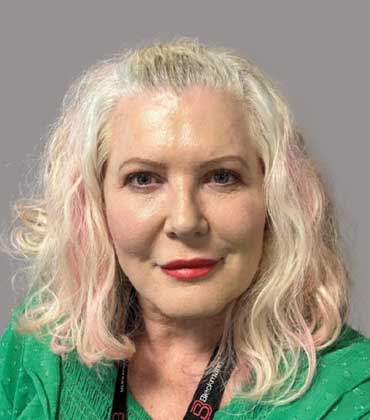
Lisa Cottingham
My name is Lisa Cottingham I have worked in a customs environment for over 32 years from a large parcel operator through to a manufacturing business. Predominantly around process improvement, standardisation, automation and training businesses in customs declarations, classification and applications for AEO accreditation. During the last 10 years I have also gained a degree in Leadership and Management.
If there’s one lesson I can draw from my decades as a customs professional in the UK, it would be the importance of a joined-up approach to duty management. I started my career as a customs agent in the early nineties, just as the Single European Act (SEA) was helping to remove barriers to trade between the UK and the EU. And now, following Brexit, we’ve seen those barriers come down again. This has placed a significant burden on both brands and logistics providers due to increasingly complex administrative requirements. This is particularly true for fashion and lifestyle products. Clothing, shoes and accessories make up one of the largest sections of the UK Trade Tariff. For example, there’s a whole chapter dedicated to the tariffs that apply to different types of anorak. And Brexit has added to this complexity. The removal of licence waivers has led to a huge increase in the amount of data we’re required to collect from clients about their products. Even if it’s just some footwear, we need proof that it doesn’t contain cat or dog fur or seal products, among other things. Combine that with European regulations – alongside a patchwork of national legislation – and you’ve got a customs management minefield. However, with the right mindset and strategy, I believe that the complexity of the customs clearance process doesn’t have to be an obstacle to success for the brands we work with. It does, however, require a more integrated, holistic and streamlined approach to duty management. That is why we are developing an end-to-end in-house customs management solution that will result in a more streamlined and cost-effective process. Why bring duty management in-house? One common response to the difficulties of managing customs post-Brexit has been to outsource this function to a third-party broker. And while they can provide the necessary expertise, the complexity of declaring goods in this category means that a more specialised and integrated solution may be more appropriate. For example, if a third-party broker doesn’t check that a valid proof of origin document exists for even one material in a particular SKU, the client could face a seven-figure fine from the authorities. On the other hand, if you’re already working with a brand as its logistics provider, you have a unique insight into its inventory – and its declaration requirements. It therefore makes sense to integrate duty management into your existing stock management and fulfilment framework. And that’s what our new approach to customs management is all about. Simplifying declarations to streamline growth To make this happen, we’ve purchased our own duty management system (DMS). This has allowed us to bring the majority of customs declarations in-house, both for goods moving between the UK and the EU and to the rest of the world. Whether it’s about imports, exports, stock transfers or returns, our automated DMS fills in a lot of the information for us. So, no matter how unique the item, it’s much easier for us to make sure we enter the correct product codes, every time. Automation also plays a key role in internal warehouse stock transfers and direct deliveries for clients. The first phase of the system went live in December 2023, and we’re already seeing promising cost savings. Sharing customs information between our UK and European sites is also essential to streamlining the declaration process. In fact, we’re even looking at developing a global customs management platform that supports customs management wherever goods are moving. While it’s still early days and there are many hurdles to overcome, we’re excited by the possibilities it will bring. And as the use of AI in the customs function continues to advance rapidly, we can expect customs management to become even more efficient. The future of customs automation The new setup will be key to supporting Bleckmann’s rapid expansion in the UK. Following several recent customer acquisitions and capital investments, we now have over 2.8 million square feet of operational space across the country. With imports and exports between the UK and the EU growing steadily, it’s vital to keep declaration processes as streamlined as possible. With the economies of scale unlocked by our new DMS, we’ll be able to provide an even more tailored and integrated service. And this will be vital in opening the door to more ambitious young brands looking to expand internationally.
The articles from these contributors are based on their personal expertise and viewpoints, and do not necessarily reflect the opinions of their employers or affiliated organizations.
